

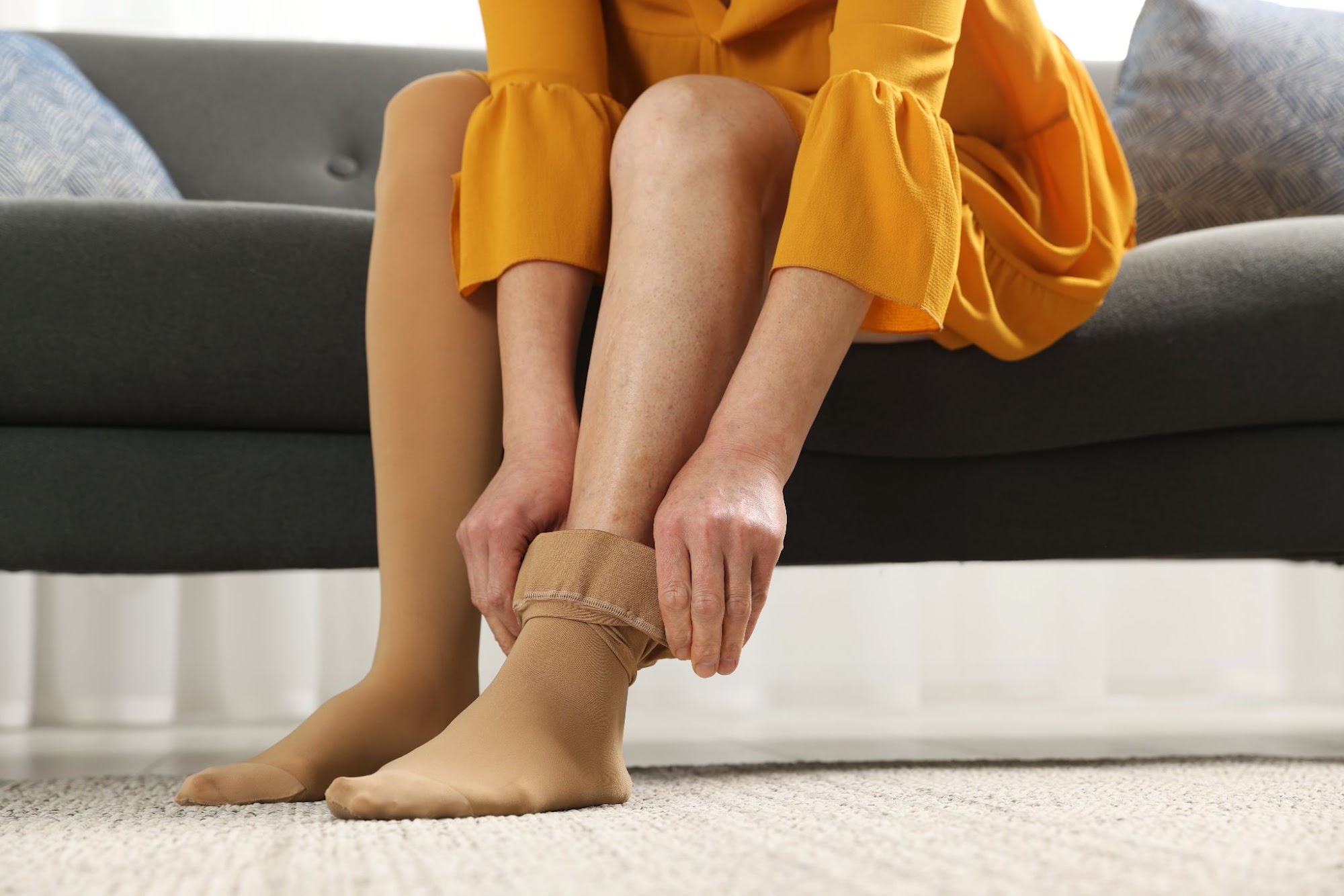
Compression socks are said to help with everything from leg swelling during long flights and easing muscle soreness to managing varicose vein symptoms, treating leg ulcers, and preventing clots. While they can improve circulation, their actual effectiveness depends on the claim. Some uses are backed by extensive research, while others have limited or mixed evidence.
In this article, the vein specialists at The Vein Centre explain how compression socks improve circulation, which uses are supported by medical evidence, and when they may not be enough or safe to use. You’ll also learn the difference between prescription and over-the-counter compression socks, how much compression is needed to be effective, and get answers to other common questions about their use.
How Compression Socks Improve Circulation
Compression socks improve circulation by applying external pressure that narrows veins and helps blood move more efficiently from the lower legs back to the heart. Most use graduated pressure, meaning they are tightest around the ankle and gradually taper off higher up the leg.
Normally, one-way valves inside the veins help prevent blood from flowing backward, while contractions of the calf muscles help push it upward as you walk. When those valves weaken or become damaged, blood can flow backward and pool in the lower legs. By narrowing the veins, compression can help the valves close more effectively while reducing venous pressure, reflux, and fluid buildup that contribute to swelling.
When Vein Specialists Recommend Compression Socks
Compression therapy has been used for decades to improve circulation and manage symptoms of vein disease, but the evidence is stronger for some uses than others. When a vein specialist recommends compression socks depends on the condition and the treatment goal. Common uses include managing symptoms of varicose veins and chronic venous insufficiency, treating venous ulcers, and reducing leg swelling or heaviness from venous circulation problems.
Varicose Veins
Compression socks may be recommended by vein doctors to help relieve symptoms associated with varicose veins, particularly swelling, aching, and leg heaviness. By applying pressure to the legs, they help narrow enlarged veins, reduce blood pooling, and improve venous return.
Research supports using compression for varicose vein symptom relief. One of the most recent randomized controlled trials, published in 2025, found that patients who wore 18-21 mmHg compression stockings for four weeks experienced significant improvements in overall symptoms, including pain, swelling, and leg heaviness.
Chronic Venous Insufficiency
Compression is commonly used by vein doctors as part of conservative treatment for chronic venous insufficiency, a condition that develops when the veins have ongoing difficulty moving blood from the legs back toward the heart, causing blood to pool and pressure to build inside the veins.
Over time, that pressure can also affect the skin, causing hemosiderin staining, a brown discoloration left behind when leaked red blood cells break down, and stasis dermatitis, which causes red, dry, itchy skin.
By narrowing superficial veins and reducing blood pooling, compression socks can help relieve symptoms such as swelling, aching, and heaviness. The amount and type of compression recommended depend on the severity of the condition, your symptoms, and your overall vascular health.
Venous Ulcers
Compression has strong evidence for treating venous leg ulcers and is one of the primary treatments vein specialists use to help ulcers heal.
Extensive research supports its effectiveness. For example, a Cochrane review of 14 randomized controlled trials found that compression bandages or stockings are likely to help venous leg ulcers heal faster, increase the likelihood of complete healing, and reduce pain compared with no compression.
Another Cochrane review found that higher levels of compression may also help prevent venous ulcers from recurring after they heal, compared with lower or no compression.
Other Causes of Leg Swelling or Heaviness
Compression socks are not only used to manage symptoms of diagnosed vein conditions. They may also be recommended for temporary leg swelling or heaviness from prolonged sitting or standing, especially if you have vein disease or other risk factors that increase the likelihood of swelling. Common examples include long flights, road trips, or workdays spent mostly on your feet or sitting with little movement.
Prolonged immobility can also increase the risk of deep vein thrombosis (DVT), which is why compression stockings have been studied for long-distance travel. Research shows graduated compression stockings can reduce asymptomatic DVT during long flights. However, this does not mean they prevent all travel-related blood clots or should be routinely used for that purpose by every traveler.
When Compression Socks May Not Be Effective or Safe
Compression socks can be effective for managing symptoms and improving venous circulation, but there are limits to what they can treat, and they may not be safe for everyone.
Compression socks cannot:
- Repair damaged vein valves
- Correct the underlying venous reflux that causes many varicose veins
- Eliminate existing varicose veins or spider veins
- Replace a vein procedure when treatment of the abnormal vein itself is recommended
Beyond effectiveness, compression socks may not be safe for everyone. People with conditions affecting arterial blood flow, sensation, or the body’s ability to tolerate sustained pressure may need medical evaluation before use.
Always talk with a vein doctor or other medical provider before using compression garments if you have:
- Peripheral artery disease (PAD) or significantly reduced arterial circulation
- Severe heart failure
- Significant neuropathy or loss of sensation
- Skin that is particularly fragile or easily injured
Even without these conditions, compression socks must fit properly. Socks that are too tight, roll, or bunch can create excessive pressure. If they cause new pain, numbness, tingling, skin discoloration, or worsening symptoms, remove them and contact a medical provider.
If swelling, aching, heaviness, skin changes, or worsening varicose veins persist despite wearing compression stockings, a vein evaluation can determine whether another treatment may be more appropriate.
Where to Get Compression Socks: Over-the-Counter vs. Prescription-Grade
Over-the-counter compression socks can be bought without a prescription from retailers, pharmacies, medical supply stores, and online. They come in various sizes, lengths, and compression strengths and are commonly used for general needs such as mild swelling, travel, or long periods of sitting or standing. Prescription compression stockings are ordered by a doctor based on the condition being treated and can be professionally fitted to ensure the right pressure, size, and length.
A prescription does not automatically mean the stockings are stronger than over-the-counter options. Higher-pressure stockings are also available without a prescription. Compression strength is a separate feature, measured in millimeters of mercury (mmHg).
How much compression you need depends on why you are wearing them, your symptoms, and your vascular health. If you are using compression to manage a diagnosed vein condition, a vein specialist can determine the appropriate strength and fit.
Frequently Asked Questions
What’s the difference between compression socks and compression sleeves?
The main difference between compression socks and compression sleeves is the area they cover. Compression socks cover the foot, ankle, and lower leg, while compression sleeves leave the foot uncovered and apply compression mainly through the calf. A sleeve may be appropriate when support is only needed in the lower leg. If swelling extends into the ankle or foot, a full compression sock or stocking may provide more complete compression.
Can compression socks be worn 24/7?
Compression socks generally should not be worn 24/7 unless your doctor specifically recommends it. They are usually removed before bed because, when you are lying down, gravity no longer causes blood to pool in the lower legs, so the additional compression is typically unnecessary. To learn more, read “How to Wear and Care for Compression Stockings.”
What is the downside of wearing compression socks?
Some people experience discomfort, itching, skin irritation, or numbness. However, these issues are often related to poor fit or excessive compression. Compression socks should feel snug and supportive, but they should not cause pain, numbness, or feel overly restrictive.
Evidence-Based Vein Care at The Vein Centre in Nashville and Mt. Juliet
Compression socks can be effective for managing swelling, aching, heaviness, and other symptoms of venous disease, but when used for a medical condition, they should be part of a treatment plan based on the specific cause and severity of your symptoms.
At The Vein Centre in Middle Tennessee, our vein specialists diagnose and treat varicose veins, spider veins, leg swelling, and other venous conditions. Depending on the cause of your symptoms, vein treatment may range from personalized compression therapy to minimally invasive procedures that directly address the affected veins.
If you have been wearing compression socks and your symptoms are not improving, or you are unsure whether you should be wearing them at all, schedule a consultation to determine whether compression is the right approach or if another treatment option may be more appropriate.
Disclaimer: This article is for educational purposes only and does not constitute medical advice. Individual treatment recommendations should be made by a qualified medical provider based on a full evaluation.
