

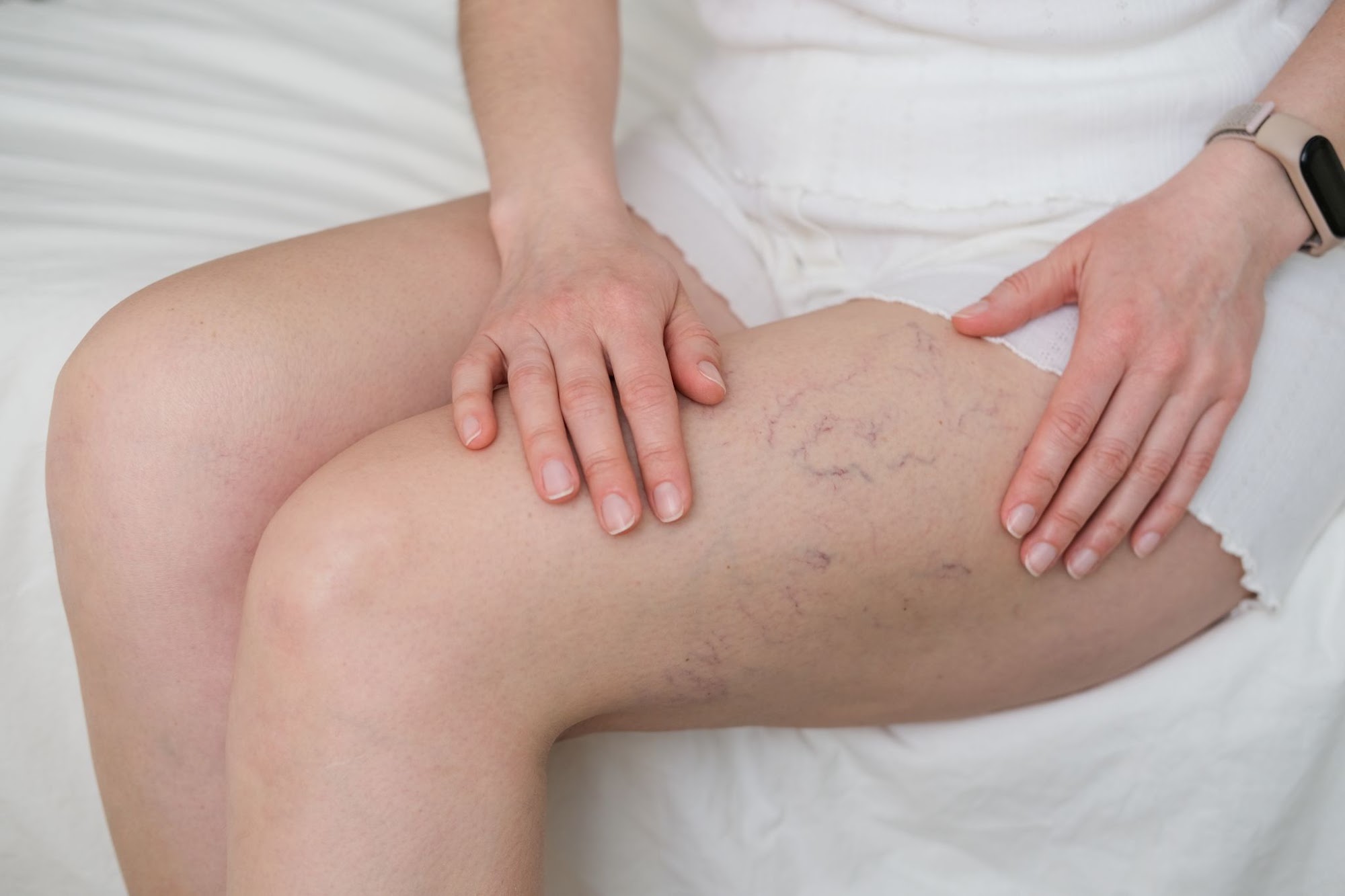
Spider veins are small, visible blood vessels that look like thin red, blue, or purple lines beneath the skin. They are usually harmless, but most people are bothered by their appearance and want to know how to get rid of them.
Whether spider veins go away without treatment depends on why they appeared. Most established spider veins do not fully disappear without treatment, but some may fade if a temporary change caused them.
In this article, the vein doctors at The Vein Centre in Nashville explain when spider veins may go away, when they require treatment, what procedures are used, and when spider veins may be more than an aesthetic concern.
Will Spider Veins Go Away on Their Own?
Unfortunately, spider veins rarely go away on their own. Once blood vessels weaken or stretch, causing the web-like veins to form, the damage is usually permanent. You may notice your spider veins sometimes look better, but that does not mean they will vanish.
The common exception is when spider veins are due to pregnancy, other temporary hormone changes, or specific medications. In these cases, spider veins may fade with time after the trigger changes.
While lifestyle changes can help prevent new veins from forming, there are no proven home remedies that can eliminate existing, established spider veins. To remove spider veins, you will likely need a minimally invasive, in-office professional treatment.
Why Spider Veins Form and Usually Stay
Spider veins form when small blood vessels near the skin’s surface weaken or become damaged, causing blood to leak, pool, or increase pressure that stretches the vessel.
Once blood vessels weaken or stretch, causing the web-like veins to form, the structural changes to the vessel walls are typically permanent, as they lose the elasticity needed to shrink back on their own.
Anyone can get spider veins, but the most common risk factors include:
- Genetics or family history
- Pregnancy
- Hormonal changes
- Birth control pills or hormone therapy
- Excess body weight
- Aging
- Long periods of sitting or standing
- Excess pressure in the leg veins
- Sun exposure, especially on the face
- Prior injury or trauma to the skin
The only way to make established spider veins fade or disappear is to close or remove the affected vein with treatment.
How Are Spider Veins Treated?
Spider veins are typically treated using minimally invasive, in-office procedures that safely collapse and fade unwanted blood vessels. Sclerotherapy is the most common treatment for spider veins, unless they are associated with underlying vein disease. In that case, your vein doctor will likely recommend treating the underlying problem first.
Can Spider Veins Come Back After Treatment?
When spider veins are treated correctly by a qualified vein doctor, the veins close, are gradually absorbed by the body, and typically do not reopen. However, you can still develop new spider veins in the same or nearby area.
Spider vein treatment cannot control genetics, stop aging, prevent hormone fluctuations, correct every underlying vein problem, or eliminate other factors that cause new spider veins over time.
It’s also important to know that spider vein treatment results are not instant. Treated spider veins typically take 3 to 6 weeks to fade from the skin’s surface. Larger veins may take 3 to 4 months to fully fade.
Some people also need more than one treatment. While a single session may visibly improve spider veins, 2 to 3 sessions are often needed to achieve the best results.
Can You Get Rid of Spider Veins Naturally?
It is a common myth that spider veins can be treated naturally. No reliable home remedy can make established spider veins disappear naturally or go away within a few minutes, despite what some online sources may claim. Creams, massage, and quick-fix remedies may temporarily improve how the skin looks or feels, but they cannot heal the damaged vessel.
Compression stockings can effectively manage symptoms and improve overall vein health, but professional vein treatments such as sclerotherapy are the only way to eliminate established spider veins.
For tips on preventing spider veins, read “Do’s & Don’ts For Healthy Veins: How To Prevent Varicose & Spider Veins.”
When Should You Worry About Spider Veins?
Most spider veins are cosmetic and nothing to worry about. They may bother you because of how they look, but do not always cause symptoms or require medical treatment.
However, spider veins should be evaluated by a vein doctor if they appear with symptoms such as:
- Leg pain, aching, or heaviness
- Swelling in the ankles or lower legs
- Burning, itching, throbbing, or cramping
- Symptoms that worsen after sitting or standing
- Visible varicose veins
- Skin discoloration near the ankles
- Sores or wounds that are slow to heal
These symptoms may suggest that the visible veins are not the only issue. In some cases, spider veins may appear with a more serious vein issue. A vein doctor can help determine if your visible veins are cosmetic or related to an underlying vein disease.
Other Spider Vein FAQs
Why do spider veins show up most often on the ankles or one leg?
Spider veins can develop anywhere, but the legs and ankles are common areas because the veins in the lower body work against gravity to move blood back toward the heart.
They can appear on only one leg for several reasons. Sometimes, it’s because one leg simply has more visible surface veins. Other times, it is because of increased venous pressure, prior injury, swelling, or an underlying vein issue.
Are spider veins the same as varicose veins?
No. They can occur at the same time, but they are not the same condition. Spider veins are smaller, thinner, and closer to the skin’s surface, and look like flat red, blue, or purple webbed lines. Varicose veins are larger veins that may look twisted, raised, rope-like, or bulging and are more likely to cause symptoms such as aching, heaviness, swelling, throbbing, or leg fatigue. To learn more, read “Varicose Veins vs. Spider Veins: What’s The Difference and When Should You See A Specialist?”
Can spider veins turn into varicose veins?
Spider veins do not usually turn into varicose veins. However, both can be related to increased pressure in the leg veins. If you have spider veins along with bulging varicose veins, swelling, aching, heaviness, or skin changes, it may be a sign that a deeper vein problem should be evaluated.
Do spider veins hurt?
Spider veins are typically painless and only a cosmetic concern, but they can cause mild discomfort such as dull aching, burning, throbbing, or cramping in the affected area, especially after sitting or standing for long periods. That said, a vein doctor should evaluate discomfort from spider veins, as it could indicate an underlying, more concerning circulation issue.
Spider Vein Treatment at The Vein Centre in Middle Tennessee
If your spider veins are not going away on their own, you do not have to guess whether they are only cosmetic or part of a larger vein issue. The Vein Centre provides outpatient vein care for spider veins, varicose veins, leg swelling, PAD, and other vascular concerns, with locations in Nashville and Mt. Juliet.
If you are bothered by spider veins or have symptoms such as aching, heaviness, swelling, burning, itching, or visible varicose veins, schedule a consultation to get clear answers and a treatment plan based on your needs.
